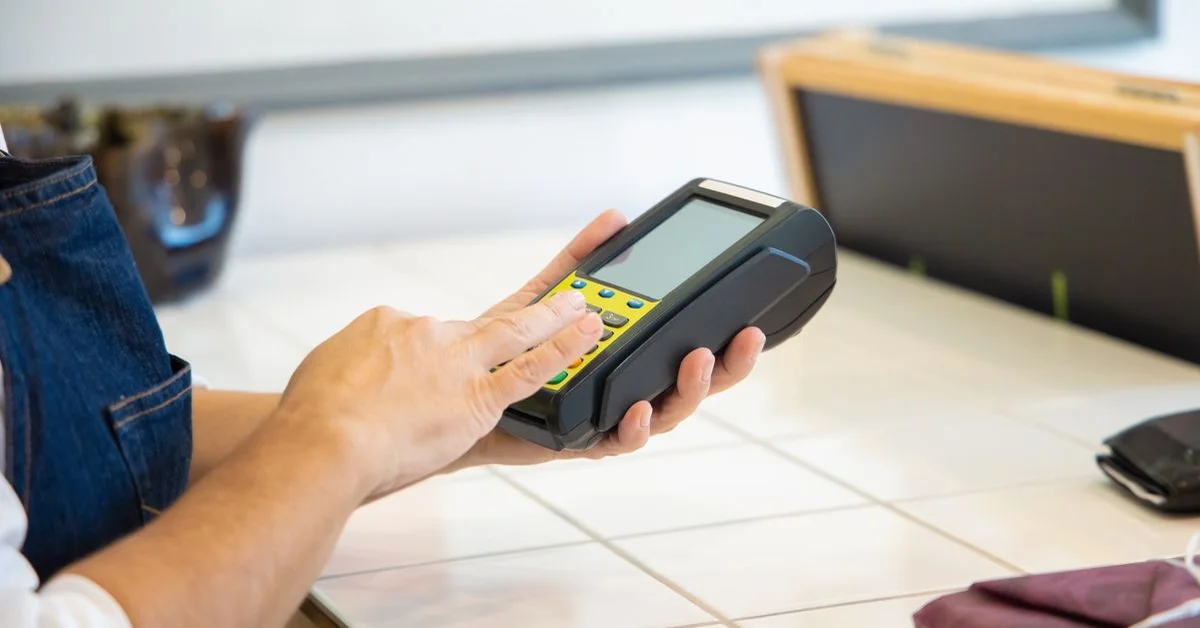
Taking card payments at a car boot sale used to mean a fixed terminal with a landline, a multi-year contract, and a monthly minimum. That has changed. A wireless card reader for car boot sales today connects to your phone via Bluetooth, costs nothing upfront or monthly, and lets you take contactless payments from anywhere — field, car park, or indoor market.
This guide covers everything about wireless card readers for car boot sellers: how Bluetooth readers work, the best no-contract options, battery life realities, signal handling in rural venues, and how wireless compares to both wired terminals and phone-only payment methods. If you need a side-by-side product comparison instead, see the best card reader for car boot sales comparison. For the full setup guide, see how to take card payments at a car boot sale.
What Is a Wireless card reader?
A wireless card reader is a small, battery-powered device that connects to a smartphone or tablet via Bluetooth. You download the provider's app, pair the reader, and take contactless, chip-and-pin, or Apple Pay / Google Pay payments. The reader communicates with the payment processor through your phone's mobile data connection.
True wireless readers store transactions internally and sync with the app later if the signal drops. This is different from mobile phone NFC payments (Tap to Pay on iPhone, Google Pay on Android), which use the phone's own NFC chip and do not work offline.
The key differences from a traditional card terminal:
| Feature | Wireless Bluetooth Reader | Traditional Fixed Terminal |
|---|---|---|
| Connection | Bluetooth to phone app | Built-in 3G/4G or WiFi |
| Contract | None — pay-as-you-go | 12-36 month contract |
| Monthly fee | £0 | £10-30 |
| Transaction fee | 1.49% - 1.75% | 0.5% - 1.0% (with monthly minimum) |
| Upfront cost | £19-29 (one-off) | £0-150 (subsidised with contract) |
| Setup time | 5 minutes (download app, pair) | 1-7 days (shipping, activation) |
| Portability | Fits in pocket | Requires power, fixed position |
For car boot sellers, the wireless reader is the obvious choice. No contract, no monthly minimum, and you can take it to any venue.
Why Bluetooth card readers Are Ideal for Car Boot Sales
Car boot sales are temporary, outdoor, and varied. A wireless reader handles all of these conditions better than any alternative.
No power dependency. The reader runs on a rechargeable battery that lasts 8-12 hours — a full selling day. Charge it the night before and you do not need a power outlet on your pitch. Compare that to a fixed terminal that needs mains power or a car battery adapter.
No contract lock-in. Boot sellers who only trade 2-4 weekends per month cannot justify a £15-30 monthly terminal fee. A no-contract wireless reader costs nothing between sales. You only pay the transaction fee when you actually sell something. This makes it the cheapest way to accept cards for low-volume sellers.
Venue flexibility. You sell at a different site next weekend? The reader goes in your pocket. Wireless readers work at outdoor fields, tarmac car parks, indoor halls, and multi-storey venues. No installation, no engineer visit, no permanent setup.
Offline mode is essential. Many car boot venues are in fields or on the outskirts of towns with poor mobile signal. The best wireless readers store transactions offline and process them automatically when you reconnect. A dedicated beginners guide to selling at car boot sales covers what else you need for your first pitch, including payment setup.
No-Contract Options: Pay As You Go card readers
The biggest advantage of a wireless card reader for car boot sellers is the pricing model. No-contract readers use a pay-as-you-go structure:
- No monthly fee. You pay nothing to keep the account active between sales.
- No minimum volume. Process one transaction a month or a hundred — the rate is the same.
- No cancellation penalty. Stop using it whenever you want. The reader hardware is yours.
- No credit check. Sign up in minutes with just an email, phone number, and bank details.
The trade-off is a higher per-transaction fee compared to contract terminals. Contract terminals charge lower rates (0.5-1.0%) but require a £15-30 monthly fee and usually a 12-month minimum. For a boot seller doing £500-1,000 in monthly card sales, the no-contract reader saves money because the transaction fee difference is smaller than the monthly terminal cost.
Here is the break-even point:
| Monthly card sales | No-contract (1.69%) | Contract (0.8% + £20/mo) | Winner |
|---|---|---|---|
| £200 | £3.38 fee | £1.60 + £20 = £21.60 | No-contract saves £18.22 |
| £500 | £8.45 fee | £4.00 + £20 = £24.00 | No-contract saves £15.55 |
| £1,000 | £16.90 fee | £8.00 + £20 = £28.00 | No-contract saves £11.10 |
| £2,500 | £42.25 fee | £20.00 + £20 = £40.00 | Contract saves £2.25 |
| £5,000 | £84.50 fee | £40.00 + £20 = £60.00 | Contract saves £24.50 |
Most boot sellers fall well below the £2,500 monthly card volume where a contract becomes cheaper. Even then, the flexibility of no monthly commitment is worth the small difference for many sellers.
For specific product comparisons between the main no-contract providers, see the card reader comparison guide.
Wireless vs Phone-Only Payments
Phone-only NFC payments (Apple Tap to Pay, Google Pay) let you accept contactless without a reader. This sounds ideal for boot sellers — no hardware to buy or carry. In practice, a dedicated wireless reader is better for three reasons:
Battery preservation. Processing payments all day drains your phone fast. A dedicated reader has its own battery, so your phone only needs enough charge to run the app and data connection. Sellers using phone-only payments report their phone dying by 1-2pm on busy days.
Offline transaction storage. Most wireless readers store transactions locally when signal drops. Phone-only solutions do not. If your venue has patchy signal — and most field-based boot sales do — phone-only payments fail mid-transaction while a dedicated reader stores the payment and processes it later.
Buyer confidence and speed. Shoppers are used to tapping a dedicated reader. Handing a phone to a buyer or asking them to tap your phone feels awkward and slows down the queue. A dedicated reader speeds up each transaction by 3-5 seconds, which adds up over a busy morning.
The selling tips guide covers how payment speed and efficiency affect your total takings.
Battery Life and Connectivity Considerations
A wireless card reader is only useful if it lasts the whole sale day and connects reliably. Here is what to look for:
Battery life. Most readers advertise 8-12 hours of active use. Real-world performance depends on transaction volume. Processing 30-50 transactions uses about 40-60% of a typical reader battery. The reader charges via USB-C or micro-USB — charge it overnight before each sale day. Some readers have a standby mode that preserves battery between sales.
Bluetooth range. The reader connects to your phone via Bluetooth, typically within 10 metres. Keep your phone within 2-3 metres of the reader for reliable connections. The reader does not need a direct line of sight, but physical barriers (metal tables, stock boxes) can reduce range.
Mobile data reliability. The transaction goes through your phone's mobile data connection. Before committing to a reader, check your phone's signal strength at your regular venues. Some venues have good 4G on one network but poor coverage on another. Consider keeping a backup phone on a different network, or check Sunday car boot sales venues for signal reports from other sellers.
What happens when signal drops:
- Best case (sumup, Zettle): Reader stores transactions offline. You take payment as normal, the reader records it, and processes it when signal returns. No interruption to selling.
- Middle ground (Square): Limited offline mode — manual card entry only. You type the card number into the app. Slower, higher fee (2.5%), and buyers are less comfortable.
- Worst case (Dojo): No offline mode. Transaction fails if signal drops. You lose the sale.
For venues with poor signal, choose a reader with robust offline mode. The best items to sell guide covers stock choices that complement your payment setup.
Setting Up a Wireless card reader for Your First Sale
The setup process for any no-contract wireless reader takes under 10 minutes:
- Download the app — sumup, Zettle, or Square from your app store.
- Create an account — Email, phone number, bank sort code and account number for settlement.
- Pair the reader — Turn on the reader, enable Bluetooth on your phone, and follow the in-app pairing instructions.
- Set your selling preferences — Default amount (£1, £2, custom), receipt options (email, SMS, none), and tax settings.
- Run a test transaction — Process a 1p or £1 test payment using your own contactless card. Refund it immediately to confirm the full flow works.
- Charge the reader fully — Leave it on charge overnight before sale day.
Most sellers run their first test at home, then arrive early at the venue to test signal and run a second test before the public enters. The beginners guide has a full first-sale checklist that includes payment setup.
Frequently Asked Questions
Do I need a mobile signal to use a wireless card reader?
Yes — the transaction processes through your phone's mobile data. However, the best readers (sumup, Zettle) store transactions offline if the signal drops and process them automatically when connectivity returns. You can keep selling even with zero signal, as long as the reader has battery.
Can I use a wireless card reader without a contract?
Yes. sumup, Zettle, and Square all offer no-contract accounts with no monthly fee and no minimum volume. You buy the reader once (£19-29) and pay only the per-transaction fee. There is no cancellation penalty.
How long does the battery last on a wireless card reader?
Most readers last 8-12 hours of active use on a full charge. For a typical car boot sale (5-6 hours of selling), the reader will not run out. Charge it overnight before each sale day. Readers use USB-C or micro-USB charging.
Which wireless card reader works best in poor signal areas?
sumup Air and Zettle by PayPal both have reliable offline mode that stores up to 200 transactions locally. These are the best choices for field-based boot sales with weak signal. Square Reader has limited offline mode (manual card entry only, 2.5% fee). Dojo Pocket has no offline mode.
What is the cheapest wireless card reader for occasional sellers?
sumup Air at £19-29 with 1.69% per transaction and no monthly fee is the cheapest option for occasional sellers. Square Reader is sometimes available free with promotions but has weaker offline support. See the best card reader comparison for full pricing details.
Can I use a wireless card reader indoors?
Yes. Wireless readers work indoors as long as your phone has mobile data or venue WiFi. Indoor venues often have better signal than outdoor fields. Some indoor venues provide free WiFi for sellers, which can be used as the data connection.
Do wireless card readers work with any smartphone?
Most readers work with iPhone (iOS 13 or later) and Android (8.0 or later). Check the provider's compatibility list before buying. The reader connects via Bluetooth — any phone from the last 4-5 years should work.
Final Thoughts
A wireless card reader is the best payment solution for car boot sellers. It has no monthly cost, no contract, no minimum volume, and works at any venue. The upfront cost of £19-29 pays for itself on your first few card sales — sellers who switch from cash-only typically recover the reader cost within one or two sale days.
Choose a reader with strong offline mode (SumUp Air or Zettle by PayPal) if you sell at field-based venues. Choose the lowest transaction fee (Dojo Pocket at 1.49%) if you sell at venues with reliable signal and high volume. Do not choose phone-only payments if you sell for more than three hours — your phone battery will not last.
Set it up before sale day, charge it overnight, run a test transaction at the venue, and you are ready to accept contactless payments from every buyer who walks past.
Find car boot sales near you on LocalBoot — search by postcode or area to discover venues where a wireless card reader gives you the edge over cash-only sellers.


